System Design & Integration
Heating, cooling, ventilation and power must be designed as one coordinated system — not selected as individual products.
Managing integration so systems operate reliably over time
Our role is to manage the integration of building services — balancing comfort, efficiency and buildability so that systems perform reliably over time. Poor coordination between systems is one of the most common causes of underperformance, noise and user frustration in otherwise well-specified buildings.
We take responsibility for that coordination from the earliest stage of design, not at the point of installation.
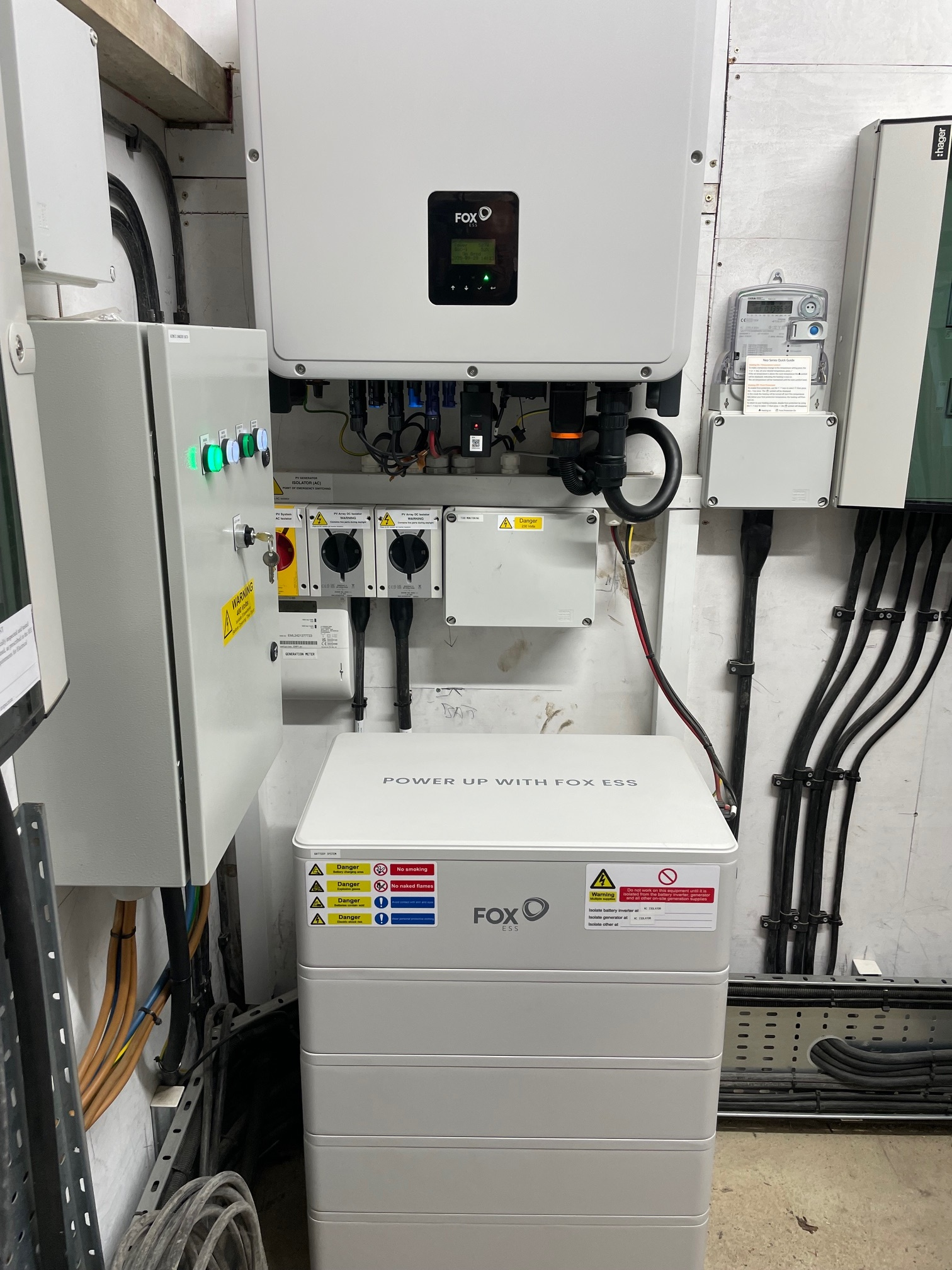
Every System Design Considers the Whole Building
We do not specify components in isolation. Every design begins with a complete picture of how the building will use and generate energy.
Building Fabric & Heat Loss
Understanding the fabric performance of the building is the foundation for every sizing decision. Poorly specified insulation or glazing directly affects system performance.
Occupancy & Internal Gains
How a building is used affects heating and cooling loads. Occupancy patterns, appliance use and solar gain are all factored into the design.
Heating & Cooling Demand
Calculated heating and cooling loads determine equipment sizing. Oversized systems are inefficient, noisy and less comfortable than correctly sized ones.
Ventilation Requirements
Ventilation rates must meet the demands of the building and its occupants without creating draughts, noise or excessive energy use.
Electrical Demand & Grid
Heat pump supply requirements, EV charging, battery charging and peak demand are reviewed against available grid connections.
Generation & Storage
On-site solar PV and battery storage are sized to complement the building's demand profile — not to maximise headline figures.
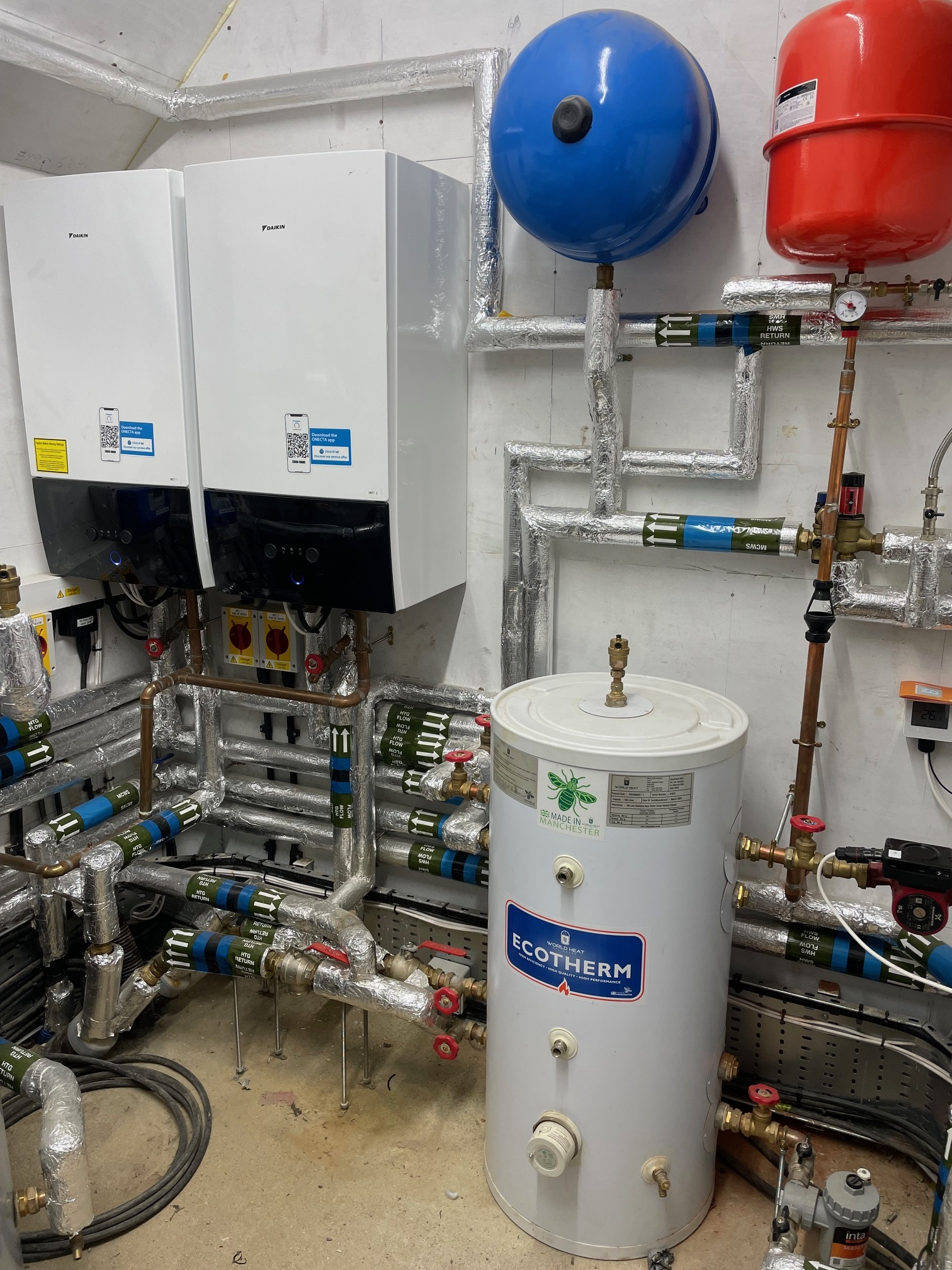
Systems that support each other — not operate independently
Integration is about balance, not adding technology. A heat pump, solar array and battery storage system that are specified independently will rarely perform as well as one designed as a coordinated whole.
We coordinate systems so that surplus solar generation preheats water, battery storage shifts peak grid imports, and heat pump operation is scheduled to minimise running costs — automatically, without user intervention.
- Heat pump and solar PV load coordination
- Battery storage scheduling for peak shifting
- Hot water preheating from surplus generation
- MVHR integration with heating and cooling
- Smart controls and energy management
Energy Forecasting
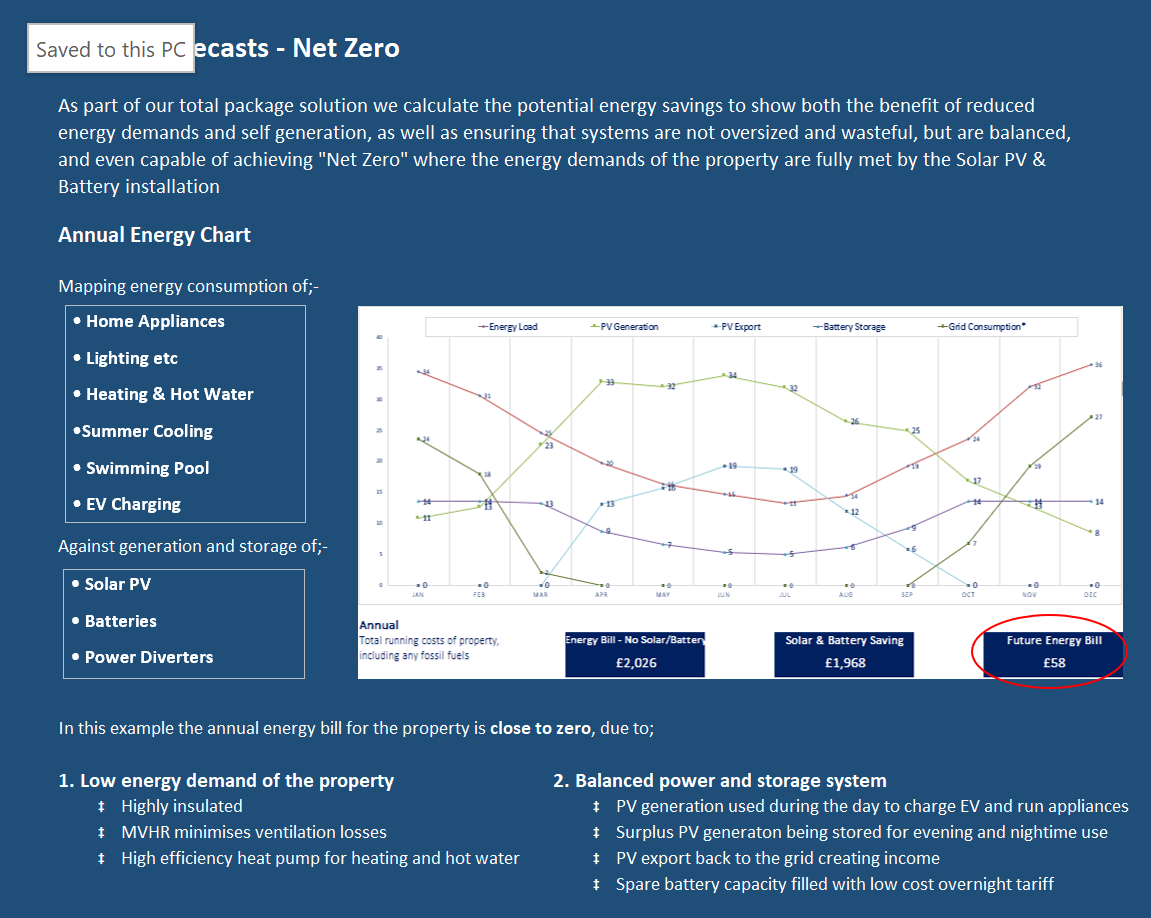
Energy modelling allows us to test assumptions, size equipment correctly and reduce risk before installation. We model annual energy demand, generation and self-consumption to validate the design and identify any issues before work begins.
This means fewer surprises during commissioning and more predictable operating costs for the building owner.
Installation Approaches
Depending on the property, systems may be fully electric, hybrid or phased. The solution follows the building, not ideology. We do not advocate for any single technology or approach — we identify the right solution for the specific project.
Where phased installation is appropriate — for example, adding battery storage after an initial heat pump installation — we design for this from the outset.
Discuss your system requirements
Whether you are at the design stage or replacing an existing system, we can help identify the right integrated approach.