Integrated Residential Projects
A selection of projects where integrated energy systems were designed as part of the building from the outset.
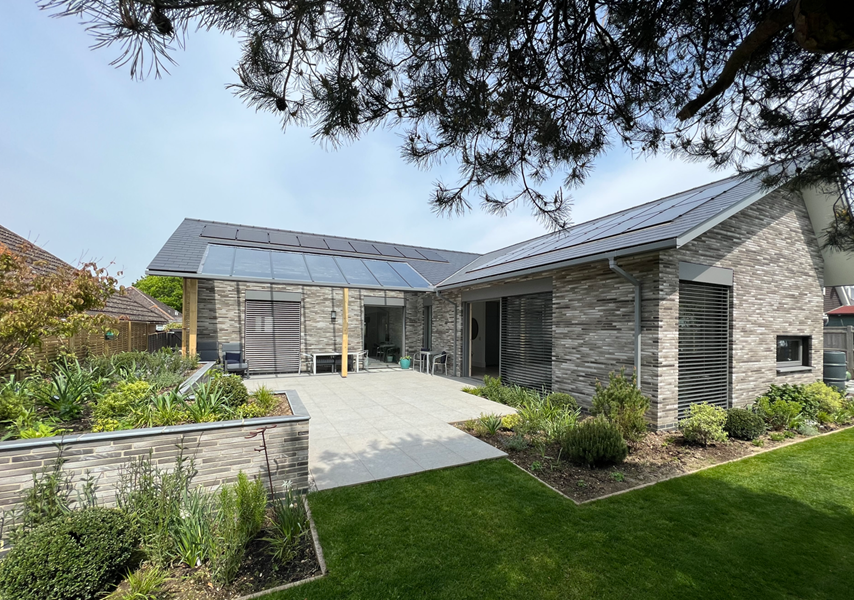
New Build – New Milton, Hampshire
A high-performance residential new build designed to minimise energy demand while maintaining excellent internal comfort. The property incorporates high levels of insulation and mechanical ventilation with heat recovery (MVHR) to reduce heat losses and improve indoor air quality. Extensive solar PV panels installed on the south- and west-facing roof elevations enable the home to achieve a net-zero annual energy cost.
Renewable Specification
- Air Source Heat Pump (ASHP)
- Underfloor Heating (UFH)
- Mechanical Ventilation with Heat Recovery (MVHR)
- In-roof Solar PV array
- Tesla Powerwall battery storage
Design Features
The design includes adaptable internal layouts, with movable internal walls allowing spaces to be reconfigured to suit occupancy. This provides additional bedroom accommodation when required, or larger open living areas during normal use.
Thermal & Spatial Performance
Ceiling heights of 3 metres enhance the sense of space and natural light throughout the property. Underfloor heating is cast directly into the main structural slab rather than the upper screed layer, increasing effective thermal mass and enabling more stable internal temperatures with long-lasting heat retention.
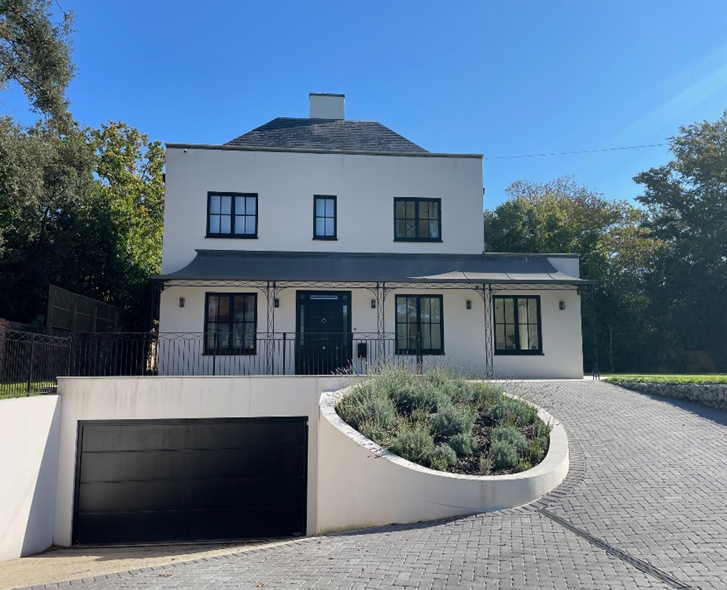
New Build - Lymington, Hampshire
Client Brief
The client required a future-proofed home capable of managing rising energy costs and increasing summer temperatures, while significantly reducing reliance on the electricity grid.
Integrated System Specification
- Ground source heat pump (GSHP) served by boreholes
- Underfloor heating throughout
- Mechanical ventilation with heat recovery (MVHR) incorporating cooling from the GSHP
- Solar PV array on the flat roof linked to large-scale battery storage
- Power diverter for managed use of surplus generation
Integrated Solution
A ground source heat pump supplied by boreholes was designed to provide low-temperature space heating in winter and active cooling in summer.
The system is powered primarily by on-site solar PV, with battery storage used to maximise self-consumption and reduce peak grid demand.
Surplus electrical generation is automatically diverted to pre-heat domestic hot water and the heating buffer, increasing overall system efficiency and further reducing operating costs. The result is a coordinated, resilient energy system designed to perform reliably across seasonal extremes.
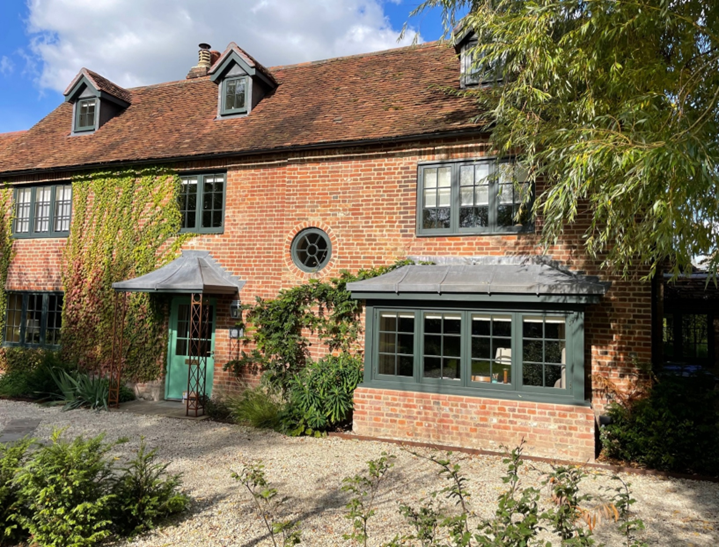
Listed Refurbishment – Salisbury, Wiltshire
This listed property underwent a comprehensive refurbishment, including the replacement of the existing heating system. The client sought to reduce environmental impact while significantly lowering ongoing energy costs. A coordinated system combining heat pumps, solar PV and battery storage has resulted in energy bills reducing to near zero.
Renewable Specification
- High-temperature air source heat pump cascade
- Column radiators
- Solar PV installed on both the main house and garage
- Large-scale battery storage
Heating Strategy
The use of high-temperature heat pumps enabled the retention of column radiators, which typically operate with high heat outputs, while still meeting the full heating demand of the property. This approach allowed the heating system to align with the architectural character of the building without compromising performance.
Heritage & Visual Considerations
To meet the aesthetic and planning requirements of the listed property, both heat pump units were carefully screened from view, ensuring minimal visual impact while maintaining system accessibility and performance.
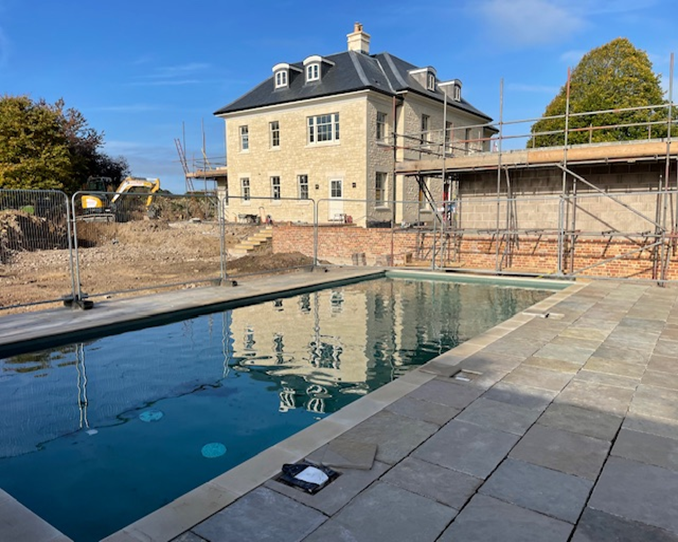
New Build – Shaftesbury, Dorset
A large new-build residential project designed with the objective of minimising long-term energy demand and achieving net-zero operation. The strategy focused on reducing heat losses through efficient ventilation while generating sufficient on-site electricity to offset the energy requirements of both the house and the swimming pool.
Mechanical ventilation with heat recovery (MVHR) was incorporated to reduce the overall heating load and improve indoor air quality, while a suitably sized ground-mounted solar PV array provides renewable electricity to support year-round operation.
Renewable Specification
- Air source heat pump cascade serving the house and swimming pool
- Mechanical ventilation with heat recovery (MVHR)
- Underfloor heating throughout
- Ground-mounted solar PV array located in an adjacent field
- Large-scale battery storage
Design Considerations
A key design challenge was the extended distance between system components, including the heat pump plant, PV array and battery storage. Pipework, cable routes and thermal losses were carefully accounted for within the design to ensure system efficiency, responsiveness and long-term reliability were maintained across the site.
Refurbished House – Blandford, Dorset
This traditional stone-built property underwent a comprehensive refurbishment to improve comfort and energy performance, including the replacement of the existing oil-fired heating system with a heat pump solution.
The objective was to modernise the building services while responding appropriately to the higher heat losses associated with solid stone walls and floors.
Renewable Specification
- High-temperature air source heat pump cascade providing heating and cooling
- Underfloor heating
Heating & Cooling Strategy
Due to the thermal characteristics of the existing structure, high-temperature heat pumps capable of delivering flow temperatures of up to 85°C were selected. This allowed column radiators to be retained alongside underfloor heating, ensuring sufficient heat output to meet demand while maintaining compatibility with the building fabric.
The system was also designed to provide active cooling to selected rooms on the most exposed, south-facing elevations, improving summer comfort without compromising the overall heating strategy.
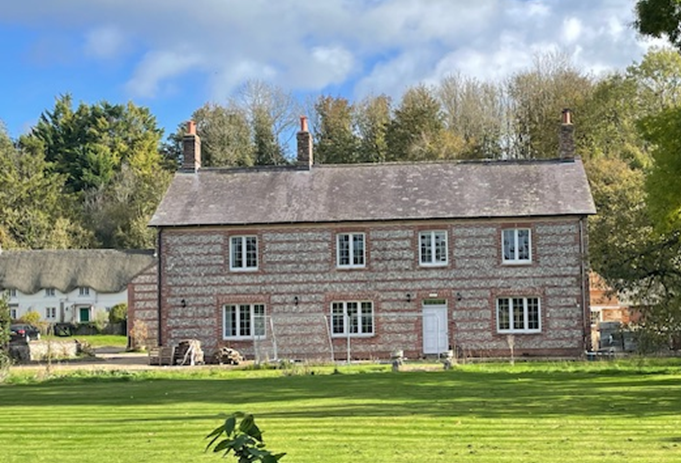
Refurbished Cottage – Shaftesbury, Dorset
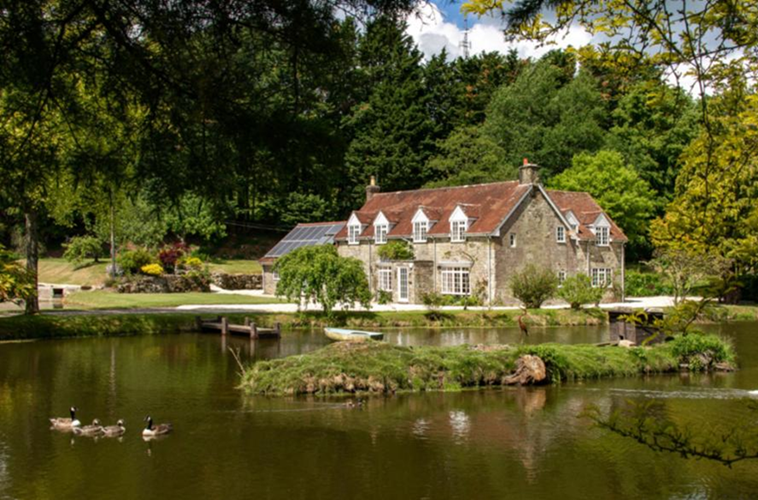
This stone-built cottage, located adjacent to a large lake, was refurbished with the objective of delivering low-carbon heating while working sensitively with the site's natural features. A ground source heat pump system was selected, using the lake as the energy source.
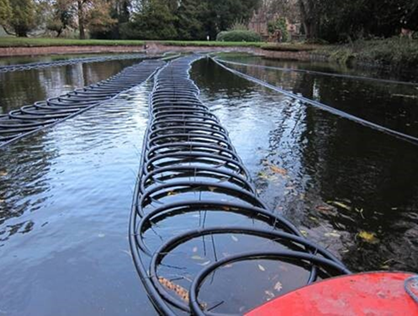
Heat extraction is achieved via ground loop pipework floated out across the lake before being carefully weighted and positioned on the lake bed, allowing heat to be drawn from the constantly moving water.
Renewable Specification
- Ground source heat pump (GSHP) with lake array
- Radiators
- Underfloor heating
- Solar PV array
System Design Considerations
A critical factor in the success of this approach was the assessment of water flow into and out of the lake. Adequate circulation is essential to ensure that heat extraction does not exceed the lake's ability to replenish energy naturally.
Detailed analysis was carried out to confirm sufficient flow rates, avoiding the risk of excessive temperature drop within the lake during winter conditions. This ensured reliable heat pump operation throughout the heating season while protecting the integrity of the lake environment.
New Build – Shaftesbury, Dorset
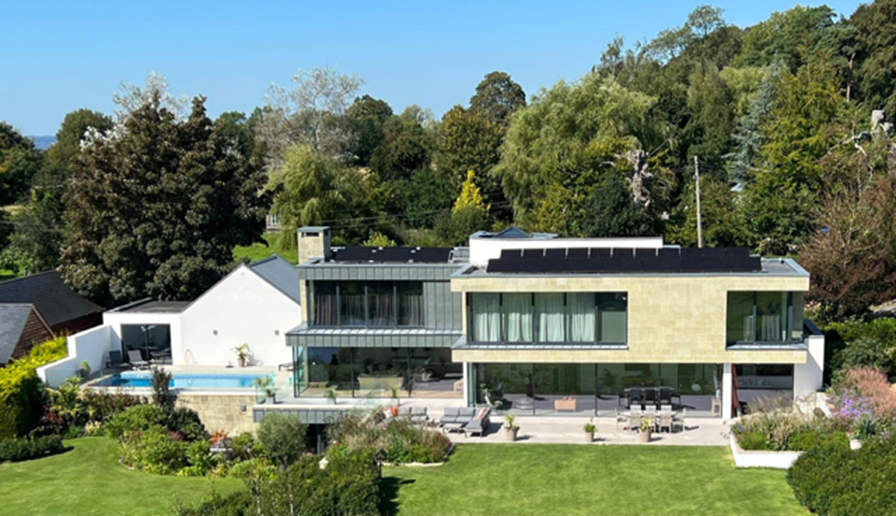
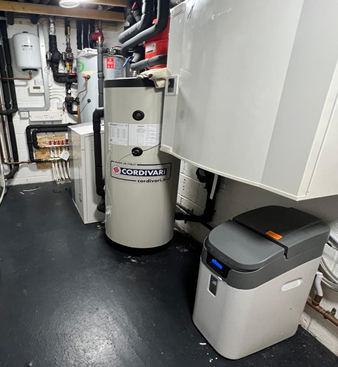
This new-build property was designed to minimise long-term running costs through the careful integration of heating, cooling and on-site generation. A ground source heat pump system with a horizontal ground array was selected to serve both the house and the swimming pool.
A key feature of the design is the use of the heat pump's passive cooling capability. During summer operation, excess heat extracted from selected rooms within the house is transferred to the swimming pool, reducing the need to generate heat directly via the heat pump and improving overall system efficiency.
The addition of solar PV further reduces reliance on grid electricity, allowing both heating and cooling demands to be met with minimal operating cost.
Renewable Specification
- Ground source heat pump (GSHP) serving the house and swimming pool
- Passive GSHP cooling via heat transfer to the pool
- Mechanical ventilation with heat recovery (MVHR)
- Underfloor heating throughout
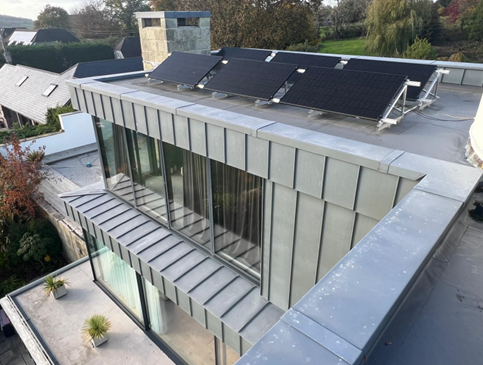
- Flat-roof solar PV array
Integrated Energy Strategy
By combining passive cooling, thermal energy reuse and on-site solar generation, the system reduces peak electrical demand and avoids unnecessary heat pump operation. This integrated approach delivers stable internal comfort year-round while minimising energy consumption and long-term operating costs.
Existing House – Studland, Dorset
This existing residential property required a future-proofed solution to manage the heating demands of both the main house and a large indoor swimming pool. The client's objective was to reduce long-term energy costs while improving system resilience and flexibility.
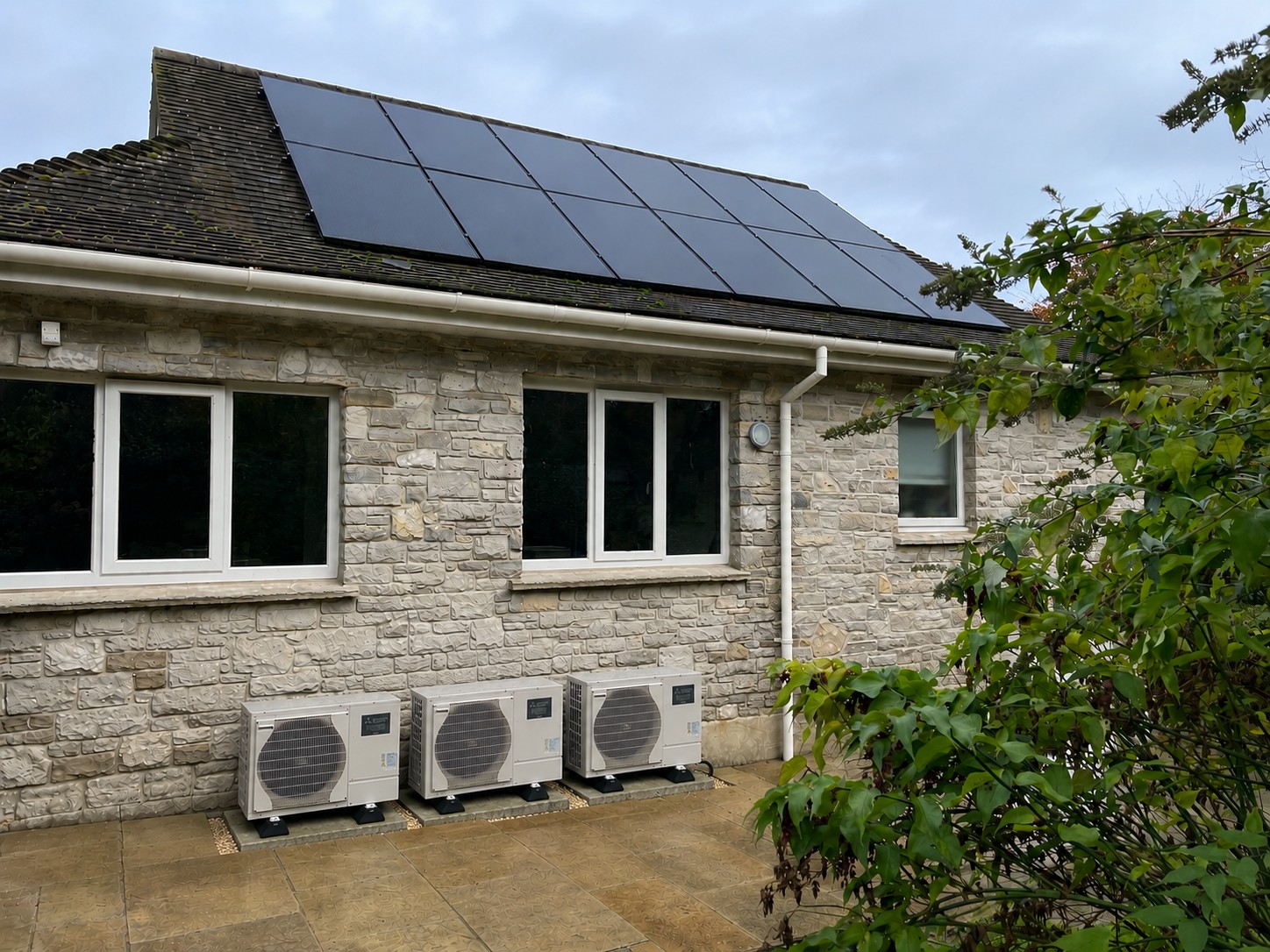
A cascaded air source heat pump arrangement was selected to share the heating load efficiently across multiple units, ensuring balanced run hours and improved system longevity.
Renewable Specification
- Air source heat pump cascade (bivalent configuration)
- Underfloor heating
- Solar PV array
System Operation & Energy Strategy
The heat pump cascade is configured to distribute demand evenly across all units, maintaining similar operating hours and improving reliability under varying load conditions. This approach also provides redundancy, ensuring continuity of service during periods of high demand.
Solar PV generation further reduces operating costs and supports on-site electrical loads, including electric vehicle charging, helping to offset both heating and ancillary energy consumption.
Discuss your project with us
Whether you are at early design stage or ready to proceed, we welcome the opportunity to discuss your requirements.