Ground Source Heat Pumps
Energy from the Ground
Ground source heat pumps collect naturally stored energy from beneath the ground and use it to provide heating and hot water. Because underground temperatures remain relatively stable throughout the year, these systems can offer consistent and highly efficient performance.
Ground source heating is particularly well suited to larger homes, country properties, rural estates and new-build projects where long-term performance is a priority. It can work with underfloor heating, radiators or a combination of heat emitters.
Ground Loops or Boreholes?
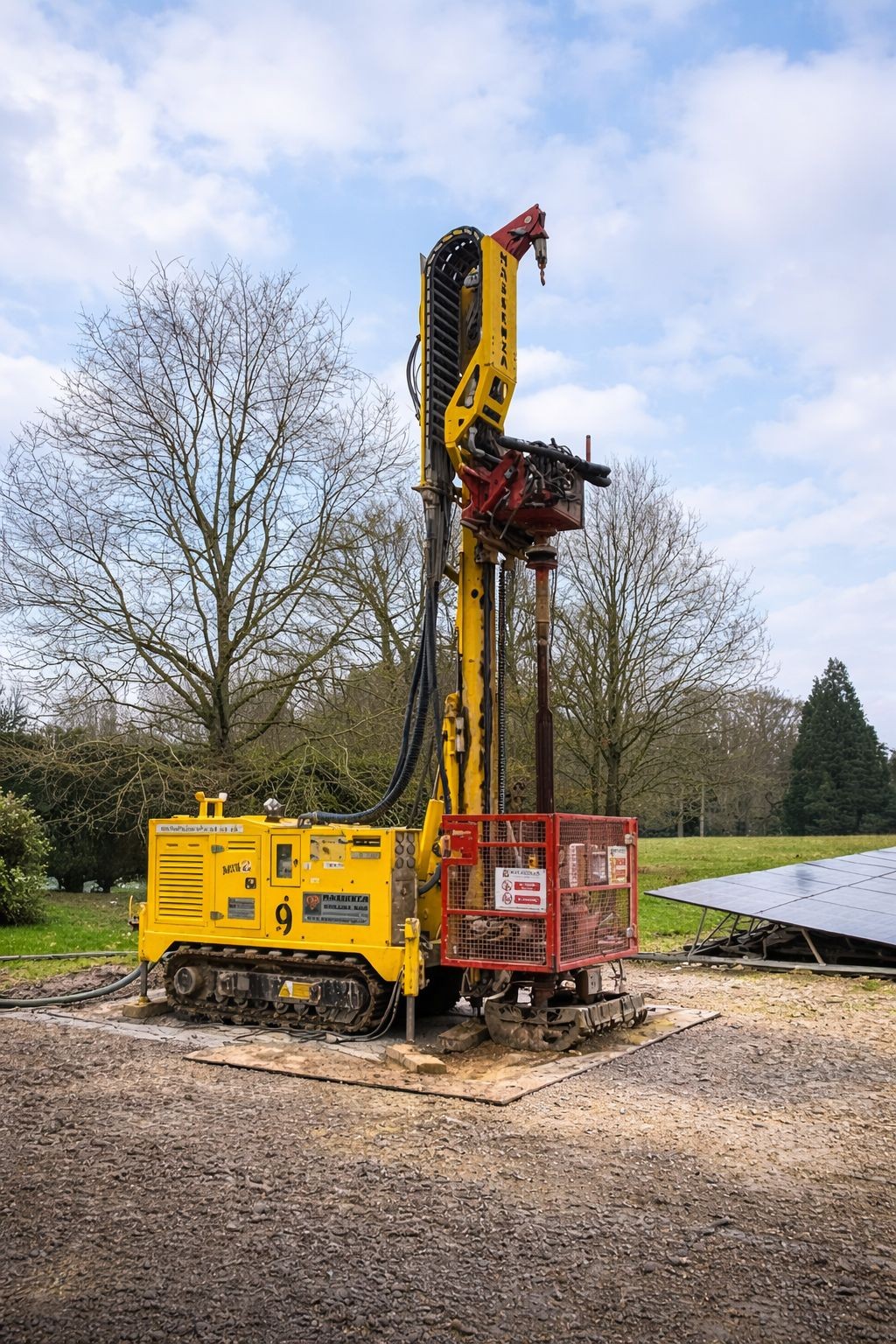
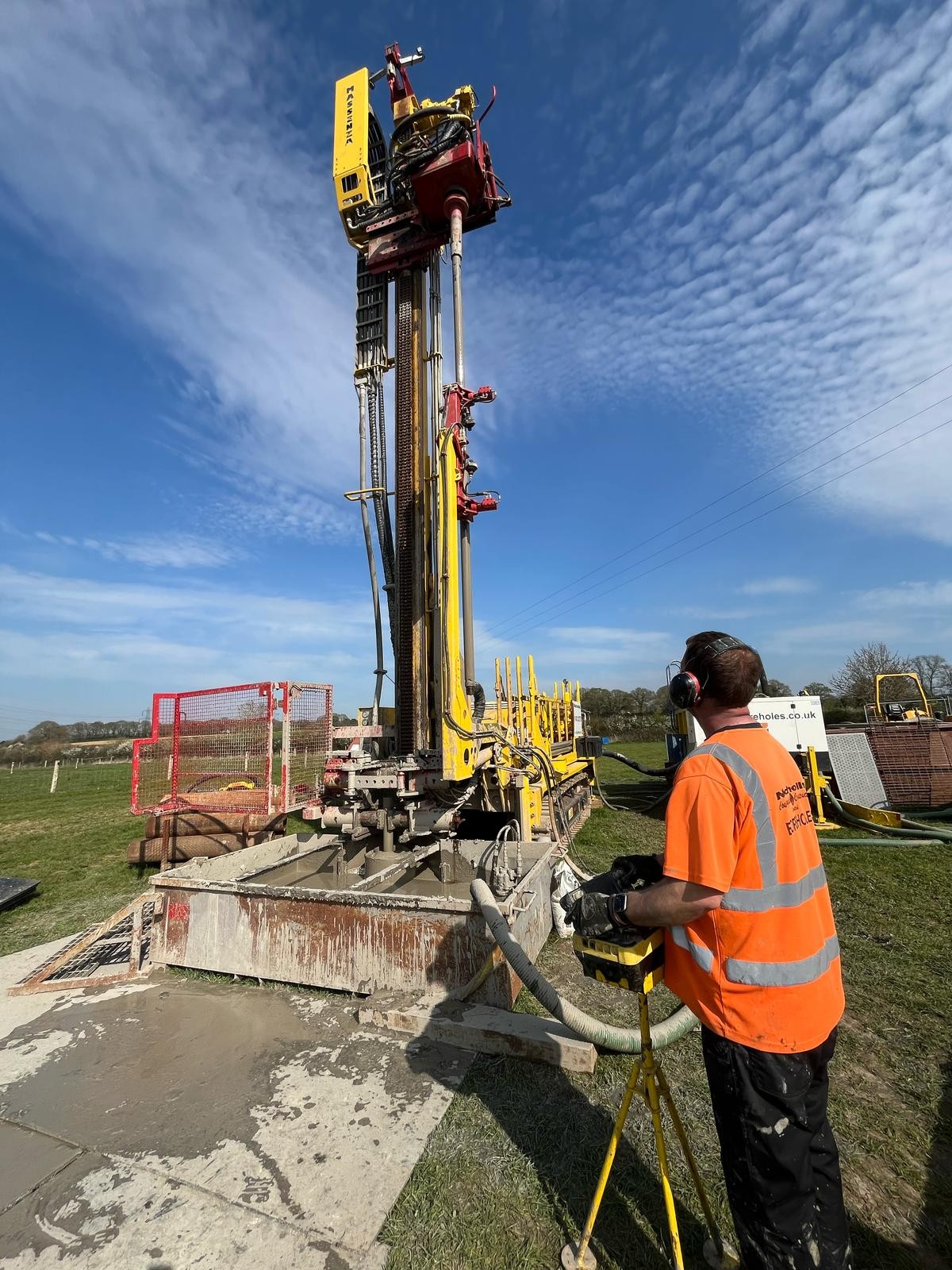
Heat is normally collected through horizontal ground loops installed in trenches or vertical pipework installed in boreholes. Horizontal loops require sufficient accessible land, while boreholes use less permanent surface area but require suitable ground conditions and access for specialist drilling equipment.
Designed as One System
A complete ground source heat pump design considers:
- The property's calculated heating demand
- Available land and site access
- Local geology and ground conditions
- Ground-loop or borehole requirements
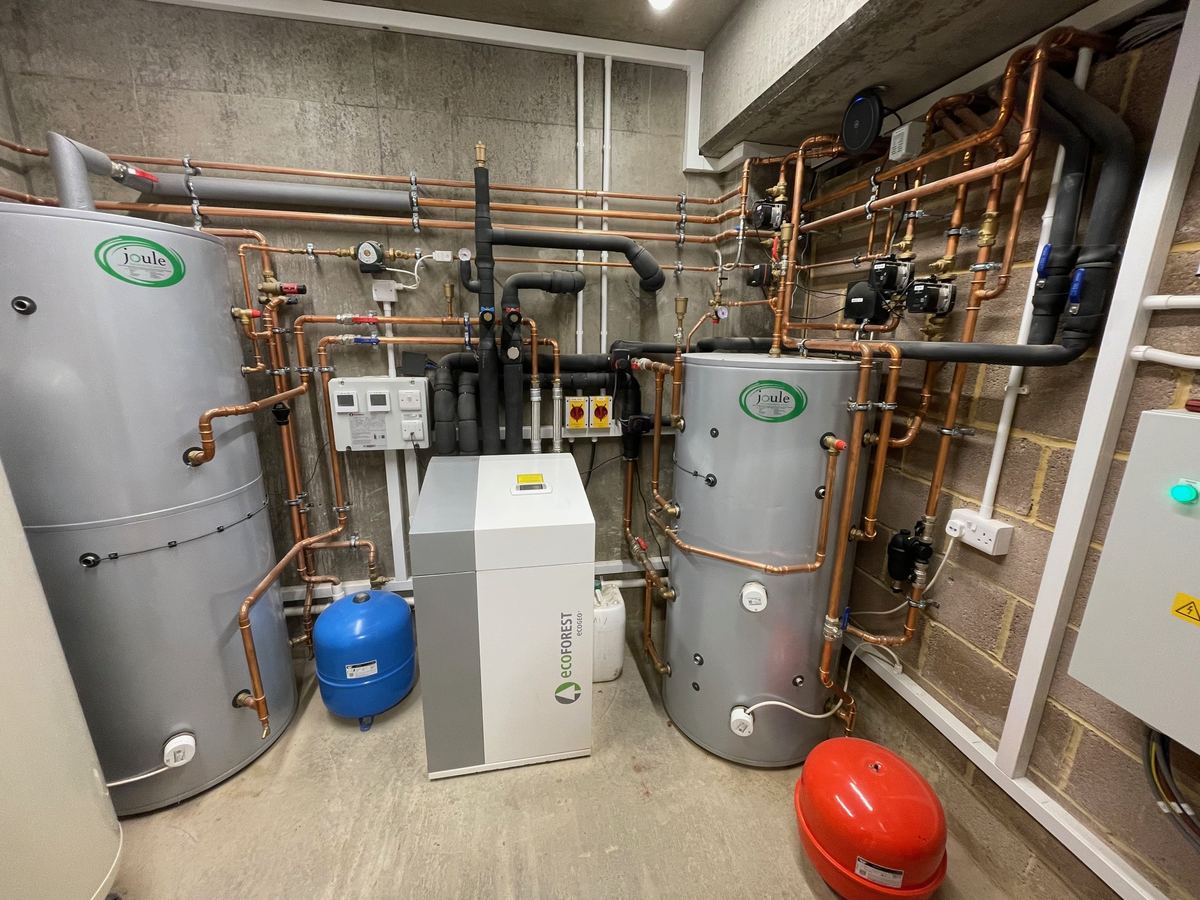
- The route back to the plant room
- Underfloor heating, radiators and hot-water storage
Ground Source Heat Pump Installers Across Dorset and the South
PowerNaturally provides ground source heat pump design and installation across Dorset, Somerset, Hampshire and Wiltshire. We coordinate the heat pump, ground array, internal heating system and associated specialist contractors.
Choosing with Confidence
Five useful questions to ask when comparing ground source heat pump quotations, proposals and system designs.
Question 1Is the property suitable for a ground source heat pump?
A ground source heat pump needs enough suitable land or safe access for drilling, so the proposal should explain why the property is a practical candidate.
Horizontal ground loops require a clear area of open land for trenches. As a broad guide, a 200m² home may need around 600m² of available ground, although the actual area depends on the property's heat loss, the ground conditions and the heating design.
Borehole systems typically require a working area of approximately 6 - 8 metres for each drilling position, allowing the equipment to operate safely. Around 4 metres of access width is normally preferred for the drilling rig, although access as narrow as 2 metres may sometimes be possible.
Underground services, trees, drainage, hard landscaping, ground conditions and site-access restrictions can all influence feasibility and cost.
Question 2Has the ground array been appropriately designed and sized?
Once the most suitable collection method has been identified, the proposal should show how the system has been sized for the property's calculated heat loss and the characteristics of the ground.
For horizontal loops, the design should specify the required collector length, land area, trench depth and spacing. For boreholes, it should state the proposed number, position and depth of the boreholes.
Depending on the scale and complexity of the project, the design may also require geological information or a thermogeological assessment.
A ground array that is too small may not recover enough heat between heating seasons, leading to reduced performance and potentially falling ground temperatures over time.
Question 3What ground conditions affect the design?
Ground conditions affect how readily heat can be transferred into the collector. The design should therefore identify the assumed geology and thermal properties rather than relying on a standard allowance used for every site.
For borehole projects, a thermogeological assessment can help establish the likely conditions, thermal conductivity and drilling conditions. Larger or more complex systems may require specialist modelling or a thermal response test.
The proposal should make clear which information is confirmed and which remains an assumption, particularly where the final drilling conditions cannot be known until work begins.
Question 4Does the quote include groundworks, trenching, boreholes or reinstatement?
A ground source installation involves more than the heat pump itself. The quote should clearly show what is included for drilling or trenching, access, spoil removal, water management, reinstatement and connection back to the plant room.
The quotation should also explain what happens if unexpected ground conditions are encountered and whether additional drilling time, casing or spoil removal could become an extra cost.
Question 5Who is responsible for the complete ground-source system?
A ground source heat pump project can involve several companies, such as the heat pump designer, thermogeological assessor, drilling contractor and heating installer. The quotation should identify who is coordinating these parties and taking responsibility for the overall system design.
It should also include the key checks before handover, such as pressure testing, flushing, antifreeze levels, commissioning and final flow temperatures.
Discuss a Ground Source Heat Pump Project
Whether you have land available for ground loops or are considering a borehole system, we can help establish what is practical for your site and design a system around it.