Integrated Systems
One Coordinated Energy System
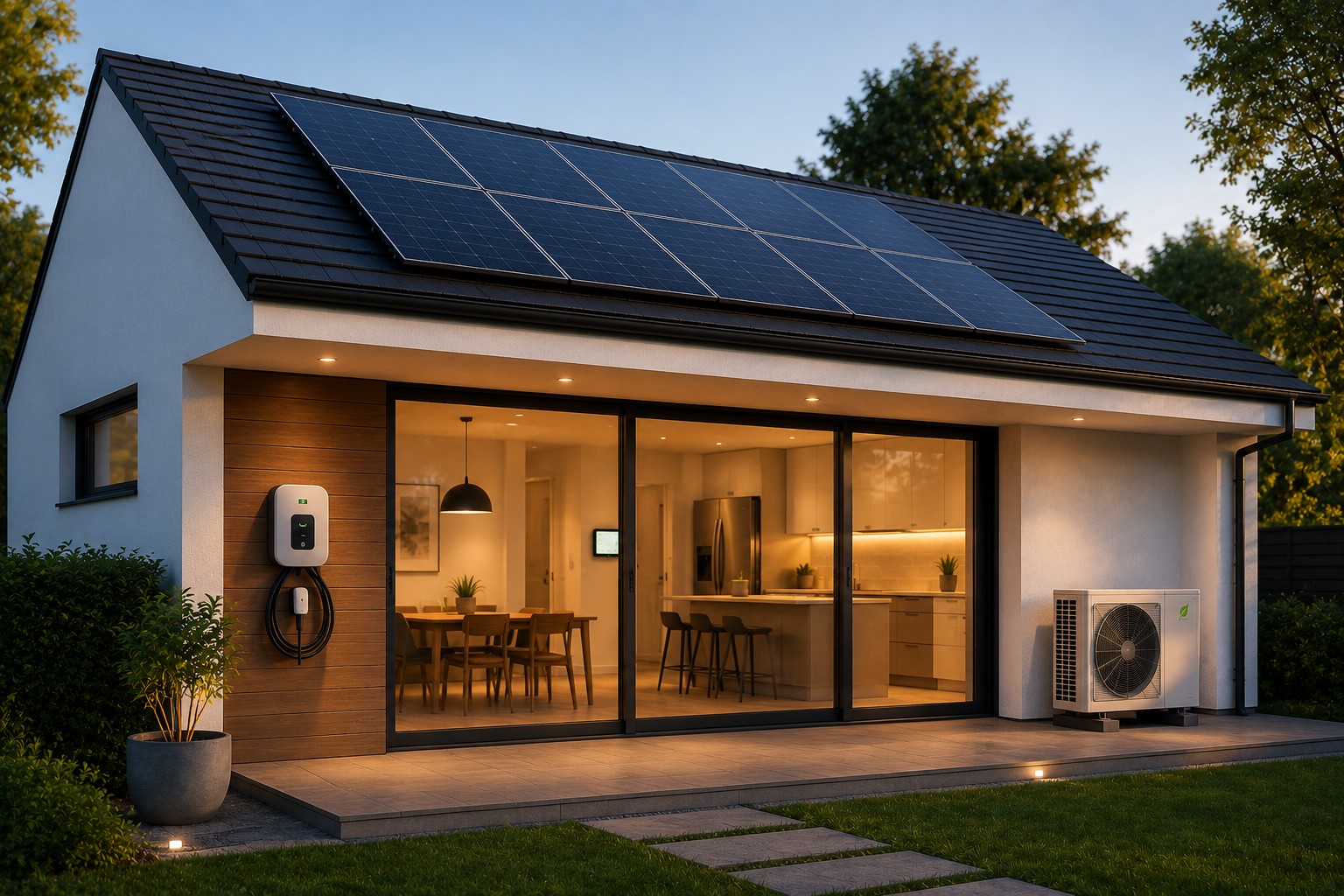
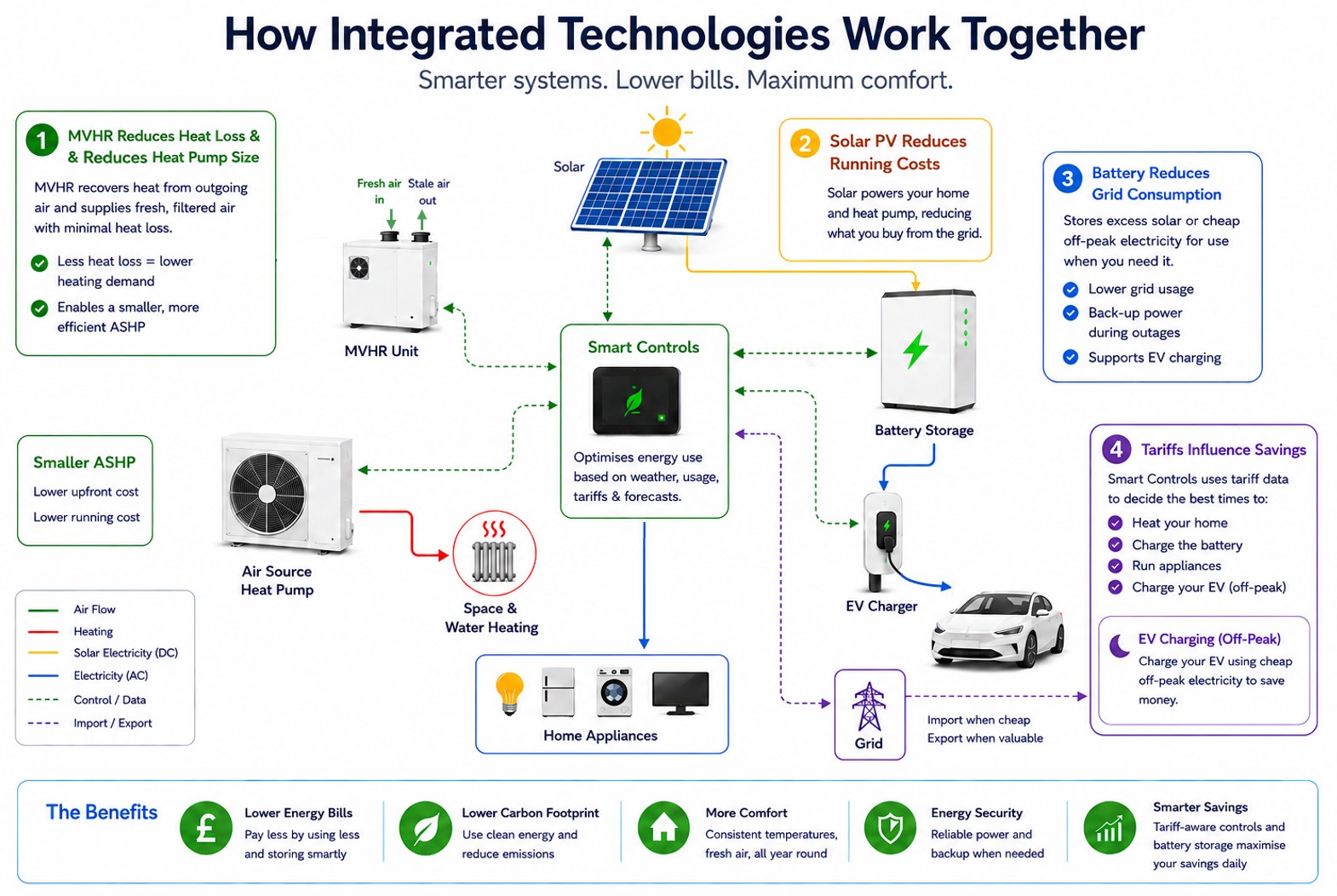
Modern homes may use several technologies for heating, hot water, ventilation, electricity generation, battery storage and EV charging. Although each product has a different purpose, decisions made for one system can affect the requirements and performance of another.
For example, MVHR can affect the calculated heating demand, a heat pump increases electrical consumption and solar generation may be shared between the home, battery, hot water and vehicle. Considering these interactions early helps prevent incompatible equipment, unnecessary capacity and confusing controls.
Technologies Working Together
A PowerNaturally whole-home renewable system may include:
- Air source or ground source heat pumps
- Hot-water cylinders and thermal storage
- Wet underfloor heating
- MVHR and ventilation
- Solar panels and battery storage
- EV charging and power diverters
- Battery backup and smart energy controls
- Associated electrical and plumbing works
A Coordinated Approach
Not every property requires every technology. We establish what the home needs, how it will be used and which systems offer a practical benefit before recommending equipment.
From initial assessment and design through to installation, commissioning and handover, PowerNaturally provides a coordinated approach and one clear point of responsibility for the renewable technologies included within our scope.
Choosing with Confidence
Five useful questions to ask when comparing whole-home renewable energy quotations, proposals and system designs.
Question 1Does the proposal show how the technologies work together?
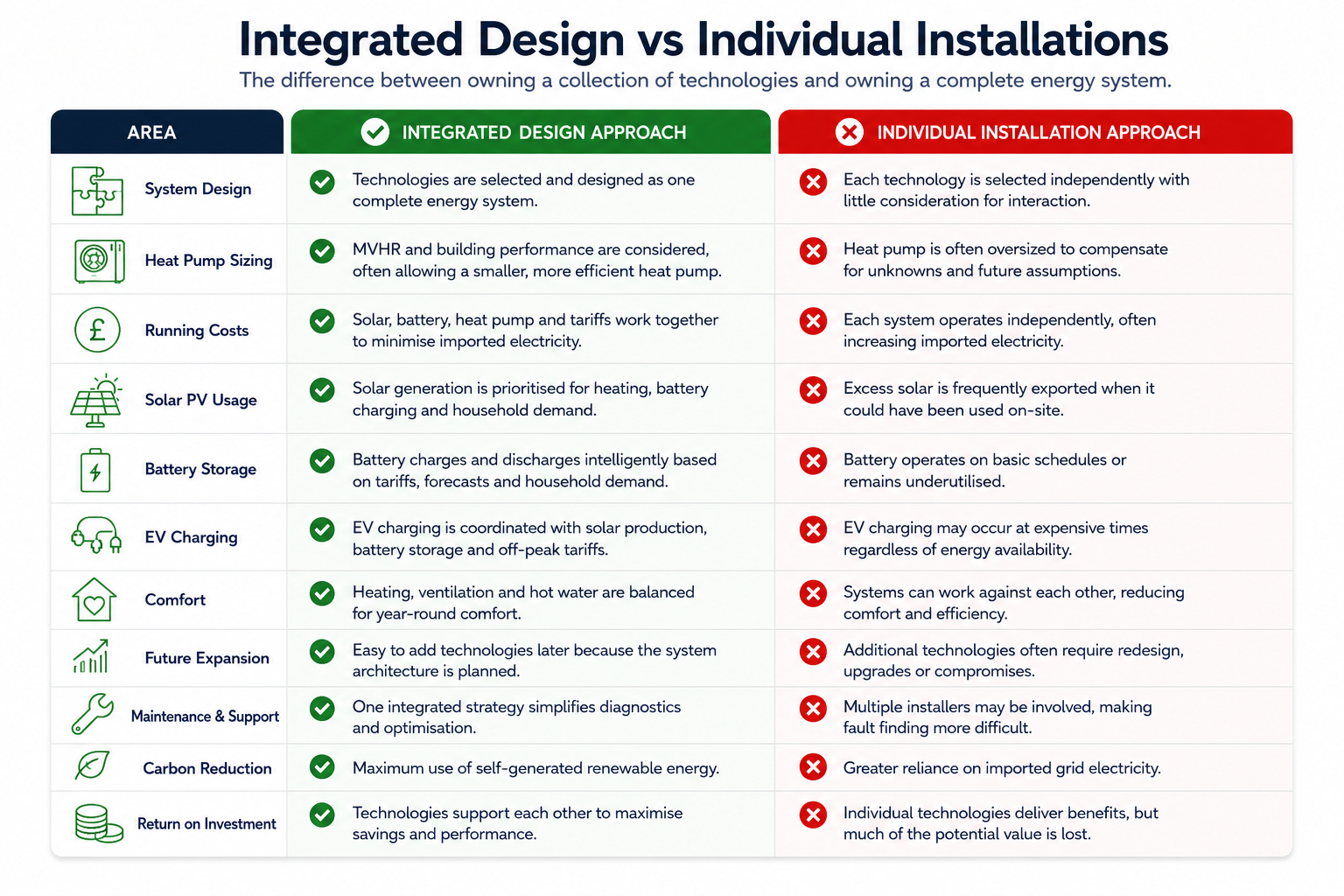
Heating, hot water, solar panels, battery storage and EV charging should be considered as one energy system when they are installed in the same property. The proposal should explain the role of each technology and the installer should be able to describe how their interaction has influenced the design.
This may include the property's expected electricity use, how surplus solar will be shared between the battery, EV charger and hot water, how heating and hot water will be controlled and whether MVHR has been accounted for when sizing the heat pump.
The largest available product is not automatically the best choice. Each element should be sized around the property's expected demand and the way the complete system will operate.
Question 2Is there a clear control strategy?
The proposal or supporting design information should explain the intended priorities between the home, hot water, battery and EV charger. For example, it should be clear whether surplus solar will charge the battery, heat hot water or charge the vehicle first and when the battery may charge from the grid.
Compatible equipment is not the same as a coordinated system. Where complete automatic control is not available, the installer should still explain the recommended settings and schedules.
Question 3Does the design allow for future upgrades?
The quote should consider the future of the property. If it is known the property will be acquiring a large extension, annex, additional EV charger or extra solar panels and batteries, the design should account for this.
This means checking the electrical supply, inverter capacity, main fuse size and any likely future electrical loads. The property's energy system should always be fit for the future.
Question 4Is there one clear point of responsibility for the full installation?
Whole-home renewable systems can involve heating, solar, battery, ventilation, EV charging and controls. If several contractors are involved, the division of responsibility must be clear.
The proposal should identify who is coordinating the overall design and resolving any control or communication issues between systems.
The customer should not be left to resolve problems between contractors when individual technologies work independently but do not operate effectively together.
Question 5Will the final performance be reviewed as one system?
The handover should explain how all the technologies work together, not just how each product operates independently. It should include the final settings, schedules, tariffs, monitoring access and operating priorities.
Where possible, the installer should review early performance once the system is being used, so settings can be checked and adjusted if needed.
Discuss an Integrated Energy System
Whether you are planning a new build or looking to add technologies to an existing home, we can help establish what makes sense for your property and design a coordinated system around it.