EV Charging
Convenient Charging at Home
A dedicated home EV charger provides a faster, safer and more convenient way to charge an electric vehicle than a standard domestic socket. Most homes use a 7kW charger, although the appropriate equipment depends on the property's electrical supply and the vehicle being charged.
Smart EV chargers can schedule charging around selected electricity periods and show how much energy the vehicle uses. Where solar panels are installed, a compatible charger may also be able to charge the vehicle using available surplus generation.
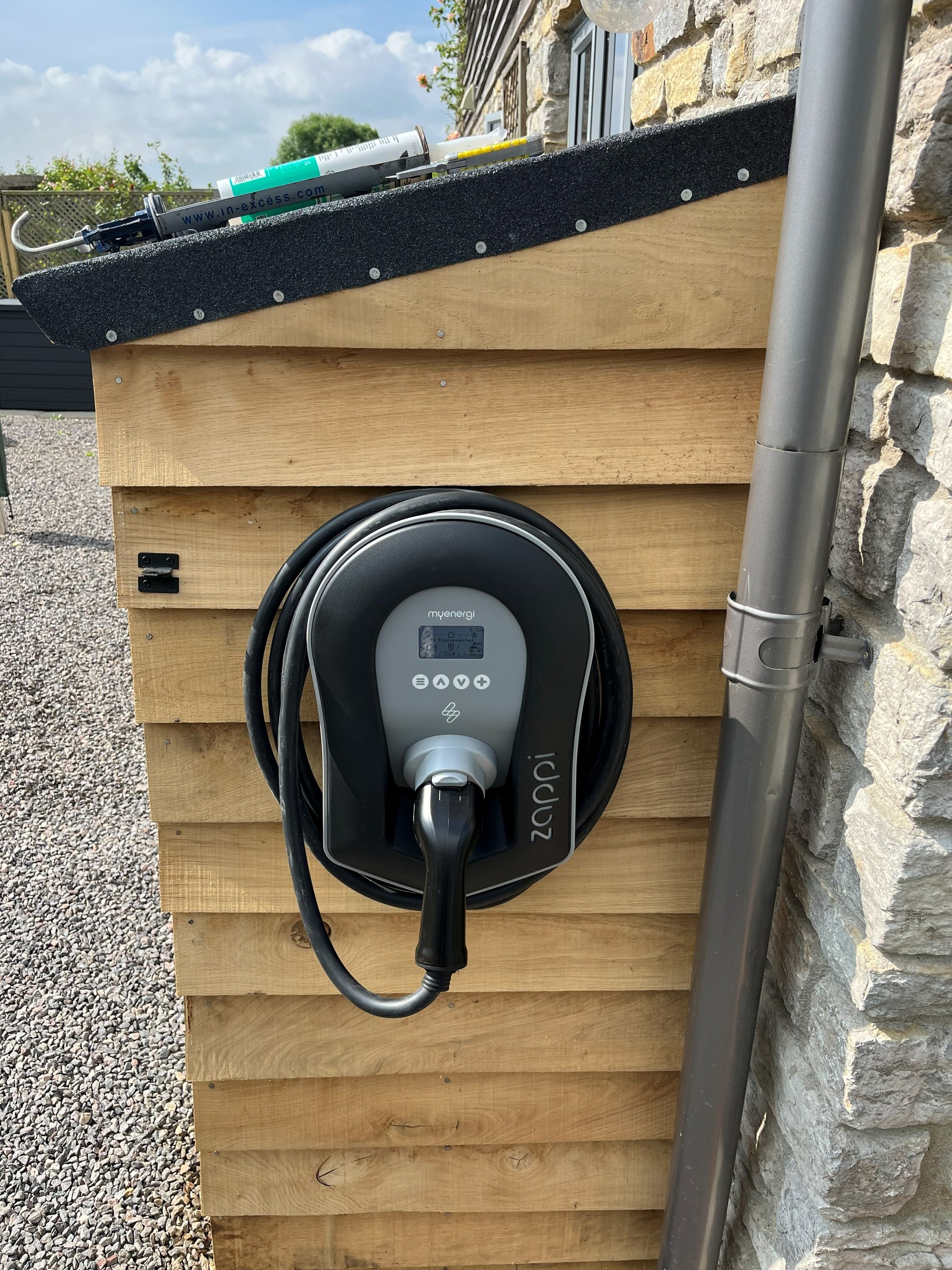
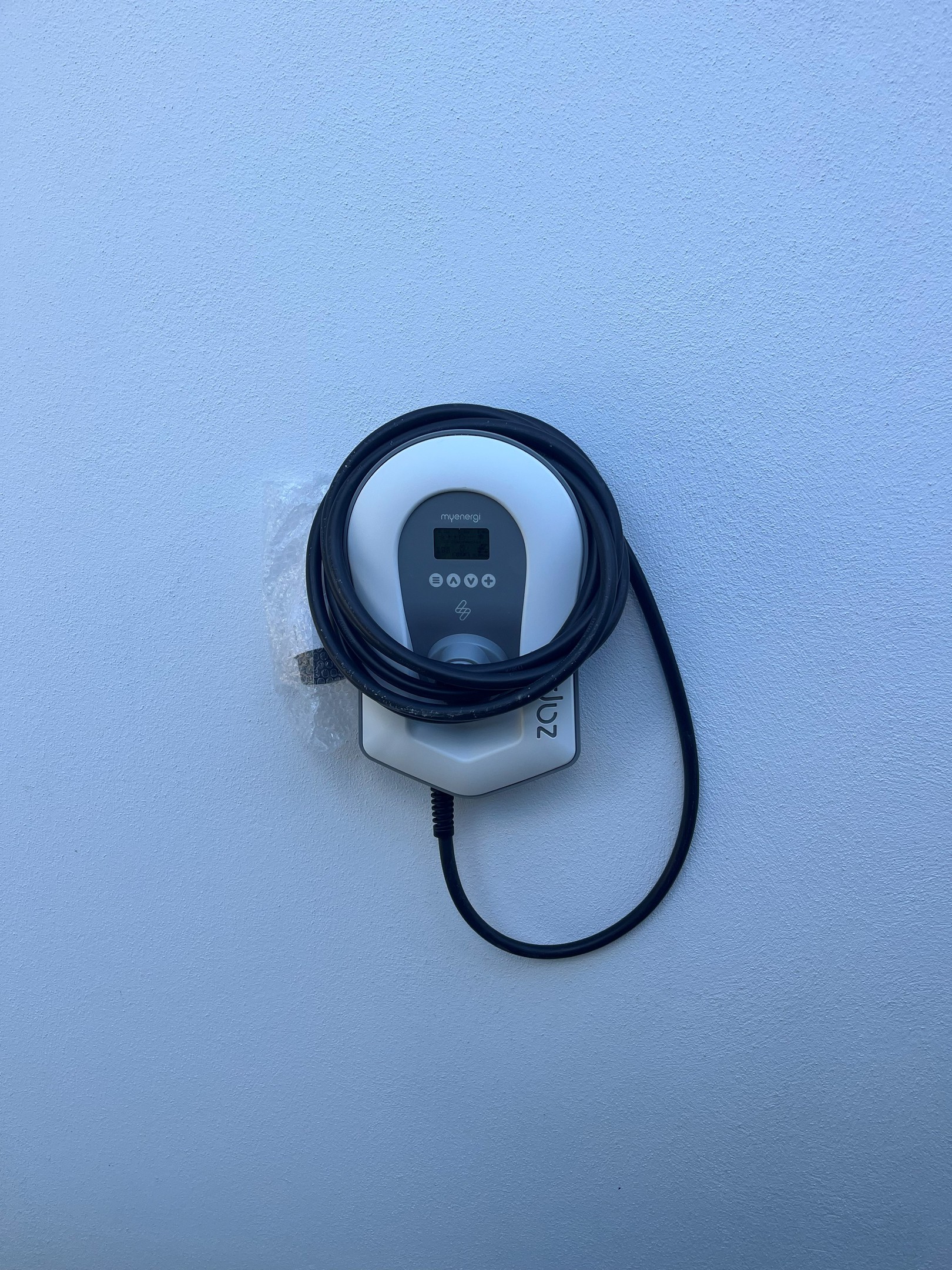
Planning the Installation
Before recommending a charger, we consider:
- The electrical supply and main fuse
- Existing and future electrical demand
- Parking position and charging-cable reach
- Charger and cable-route location
- Solar and battery compatibility
- Internet or communication requirements
- Potential provision for another vehicle
EV Charging Installers Across Dorset and the South
PowerNaturally supplies and installs smart home EV chargers across Dorset, Somerset, Hampshire and Wiltshire. We manage the required DNO process and provide the necessary electrical testing, commissioning and certification.
Choosing with Confidence
Five useful questions to ask when comparing EV charger quotations, proposals and system designs.
Question 1Does the quote specify the charger make, model and power rating?
The quote should state the exact charger being offered, including the make, model and power rating.
Most single-phase home chargers are around 7kW. Faster 22kW chargers usually need a three-phase electricity supply, so they are not suitable for every property.
Also check that the installer has selected the correct Type 1 or Type 2 connection for the vehicle that will be used.
Question 2Is permission from the electricity network required for an EV charger?
Yes. Every EV charger installation must be assessed against the requirements of the local Distribution Network Operator (DNO).
The installer is responsible for checking the property's electricity supply and determining whether the charger can be connected under the notification process or whether formal DNO approval is required before installation. This assessment must consider the charger rating, main fuse, existing electrical demand and any other significant loads, such as a heat pump, electric heating or additional EV chargers.
The proposal should confirm that the installer will manage the required DNO process.
Question 3Can the charger work with solar or battery storage?
Solar panels and battery storage can make EV charging much more efficient to manage. Solar can help charge the car using electricity generated at home, while a battery can store energy for charging an EV later in the day.
A home battery is usually much smaller than an EV battery, so the charger should be configured carefully to avoid unintentionally draining the home battery into the car.
Discuss your preferred charging arrangement with the installer before the equipment is selected.
Question 4What electrical and installation work is included?
The quote should explain where the charger will be positioned. It should also include any electrical protection, testing and certification needed for a safe installation.
Check whether extra work is included, such as drilling, trenching, consumer unit changes, isolation equipment and internet connection.
If a second charger may be required later, allowing for spare electrical capacity or installing suitable ducting during the first project may avoid unnecessary future work.
Question 5Is the charger tethered or untethered?
A tethered charger has a permanently attached charging cable, making it quick and convenient to plug in. An untethered charger has a socket, so the user supplies a separate cable. This can look tidier and provides flexibility over cable type and length.
The quotation should state which type is included and confirm that the cable arrangement is suitable for the vehicle's usual parking position.
Discuss an EV Charger Installation
We can confirm which charger is right for your vehicle and property, manage the DNO process and provide a fully certified installation.