Underfloor Heating
Comfortable, Even Heating
Wet underfloor heating circulates warm water through pipework installed beneath the floor. The large heated surface distributes warmth evenly around the room, creating a comfortable internal environment without relying on high-temperature radiators.
Underfloor heating works particularly well with heat pumps because it can usually provide the required room output at a lower water temperature. This can help the heat pump operate more efficiently and support lower heating running costs.

Choosing the Right System
Different systems are available for:
- Screeded concrete floors
- Suspended timber floors
- Low-profile overlay installations
- New builds and extensions
- Renovations and retrofit projects
- Ground and upper floors
The correct system depends on the property's heat loss, floor construction, insulation, available build-up height and intended floor finish. Each room must be assessed individually to establish the required pipe arrangement, heated area and operating temperature.
Underfloor Heating Installers Across Dorset and the South
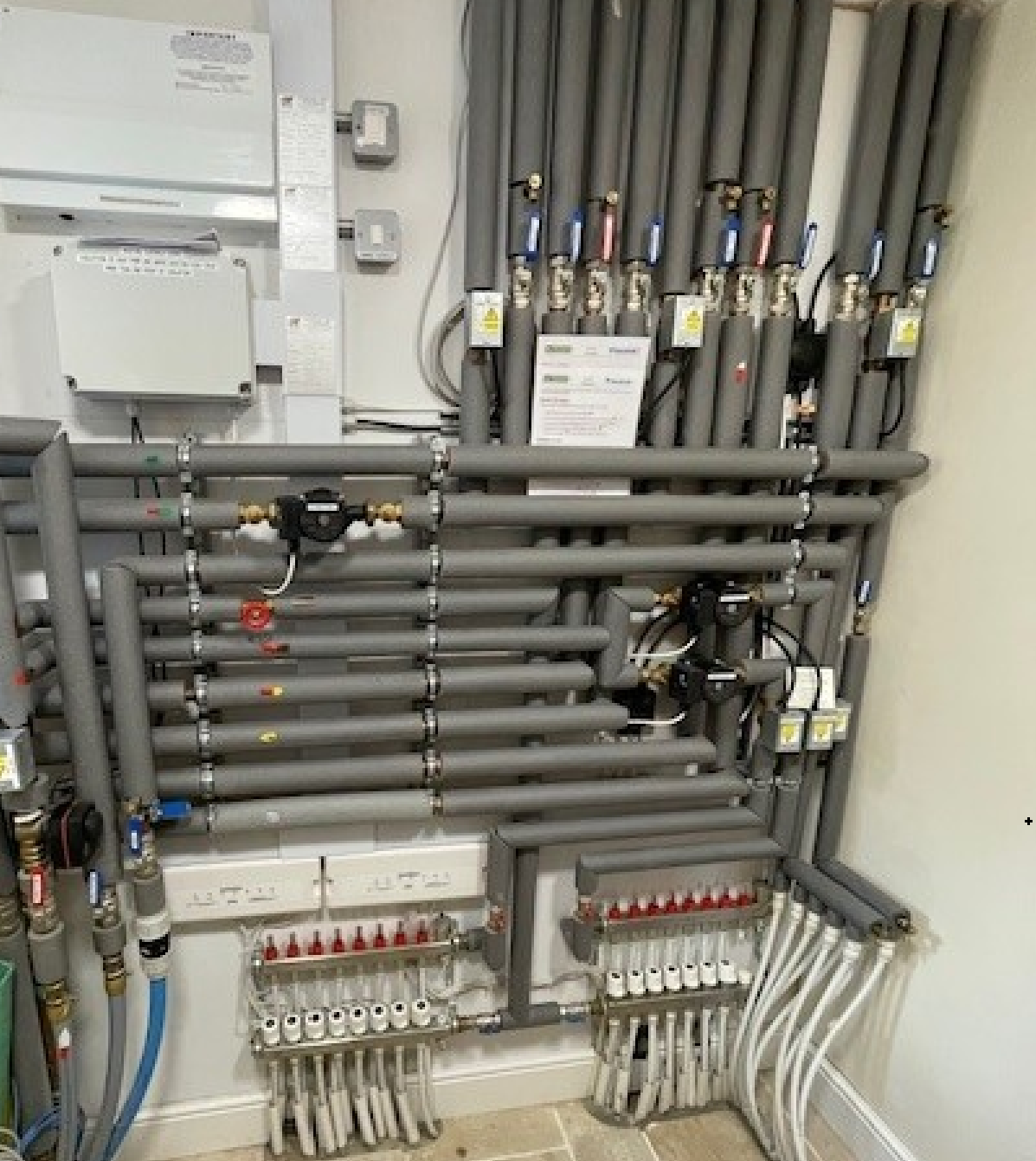
PowerNaturally designs and installs wet underfloor heating systems across Dorset, Somerset, Hampshire and Wiltshire. Our service can include manifolds, pipework, zoning, controls, thermostats, pressure testing and final commissioning.
Choosing with Confidence
Five useful questions to ask when comparing underfloor heating quotations, proposals and system designs.
Question 1How will the underfloor heating be controlled?
The quote should explain whether the underfloor heating will be controlled room by room, with a thermostat in each main room or zone, or as one larger area using a central thermostat.
Room-by-room control gives more flexibility, because different rooms can be set to different temperatures. A simpler setup with fewer zones can sometimes work better with a heat pump, because it allows the system to run more efficiently and at lower cost.
The installer should explain why the control approach has been chosen, what thermostats or controls are included and how the underfloor heating will work with the heat pump, boiler or other heating system.
Question 2Has the actual floor construction been considered?
The quotation should identify which rooms or areas are included, the type of underfloor heating system proposed, manifold locations and proposed zoning and controls included within the price. This is important because screeded floors, suspended timber floors and low-profile overlay systems are constructed differently and transfer heat at different rates.
A quotation based only on the total floor area does not provide enough information to establish exactly what system is being allowed for.
Question 3Has the underfloor heating been designed to work efficiently with the complete heating system?
The quote should explain how the underfloor heating will work with the chosen heat source, whether that is a heat pump, boiler or mixed system.
The underfloor heating must be designed to provide enough heat for each room while operating at the lowest practical water temperature. Pipe size and spacing should provide enough heat through the chosen floor finish while keeping the water temperature as low as possible, helping to reduce running costs.
If the property will have a mixture of underfloor heating and radiators, check that the installer has considered how the different areas will be controlled and whether they have accounted for different flow temperature requirements.
Question 4Is the proposed floor finish suitable?
The floor finish affects how well heat can pass from the pipework into the room. Tiles, timber, carpet and vinyl all behave differently with underfloor heating. The quote should state the assumed floor finish considered in the initial design.
Timber or vinyl floors may have temperature limits, so the chosen product should be checked before installation.
For carpeted rooms, the carpet and underlay should be considered together. If they are too insulating, the room may not get enough heat from the floor.
Question 5Does the quote include manifolds, controls and thermostats?
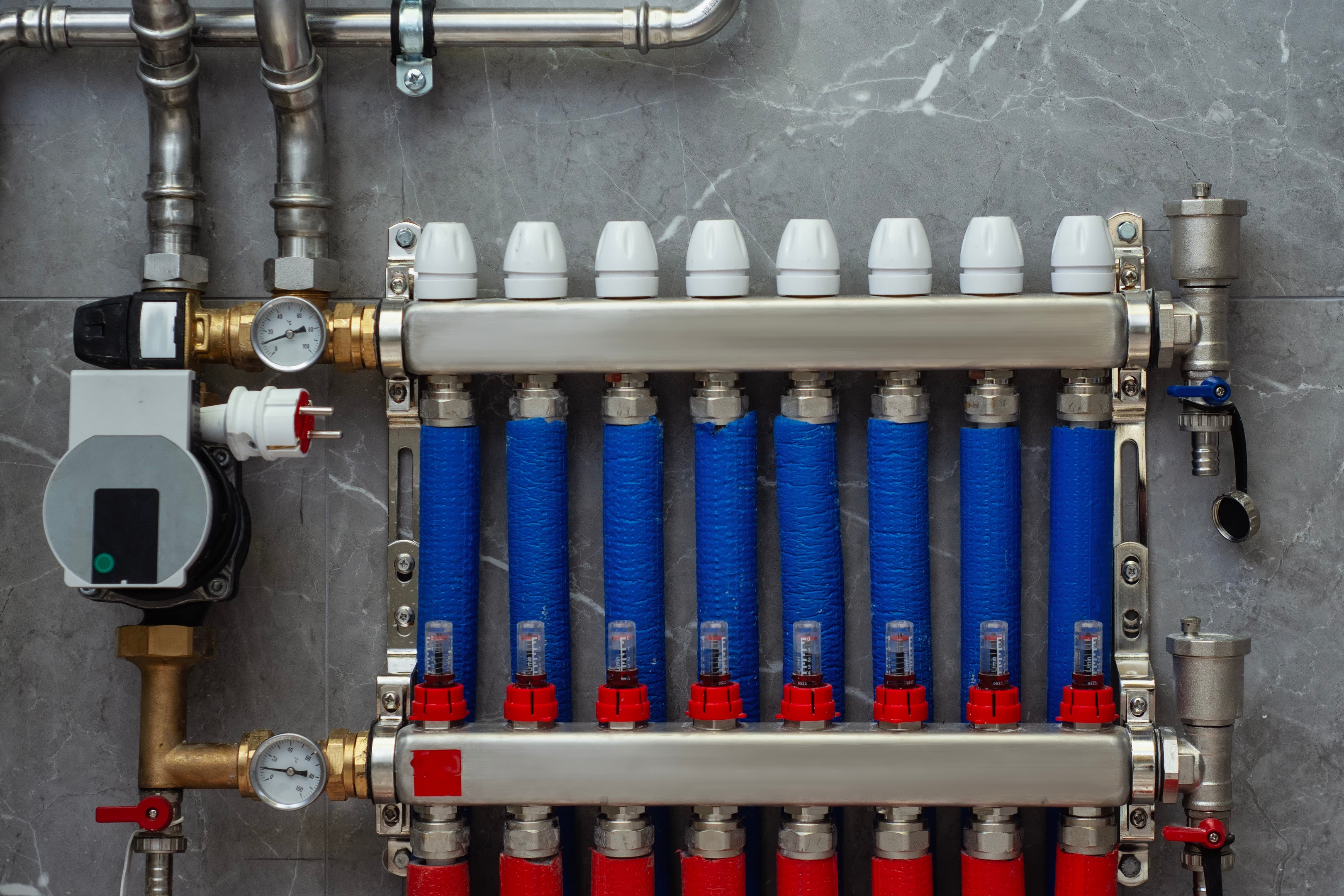
The quote should clearly show what parts of the underfloor heating system are included, such as the manifold, thermostats, wiring, controls and commissioning.
It should also explain who is responsible for pressure testing the pipework before the floor is covered. The pipework should be tested, recorded and usually kept under pressure while the screed is laid.
Check who is responsible for insulation, screed, floor preparation, flushing and connecting the system to the heat source. The quotation should also state the warranty on the system, including the pipework.
Discuss an Underfloor Heating Project
Whether you are planning a new build, extension or renovation, we can design a wet underfloor heating system around the property's heat loss, floor construction and heat source.